
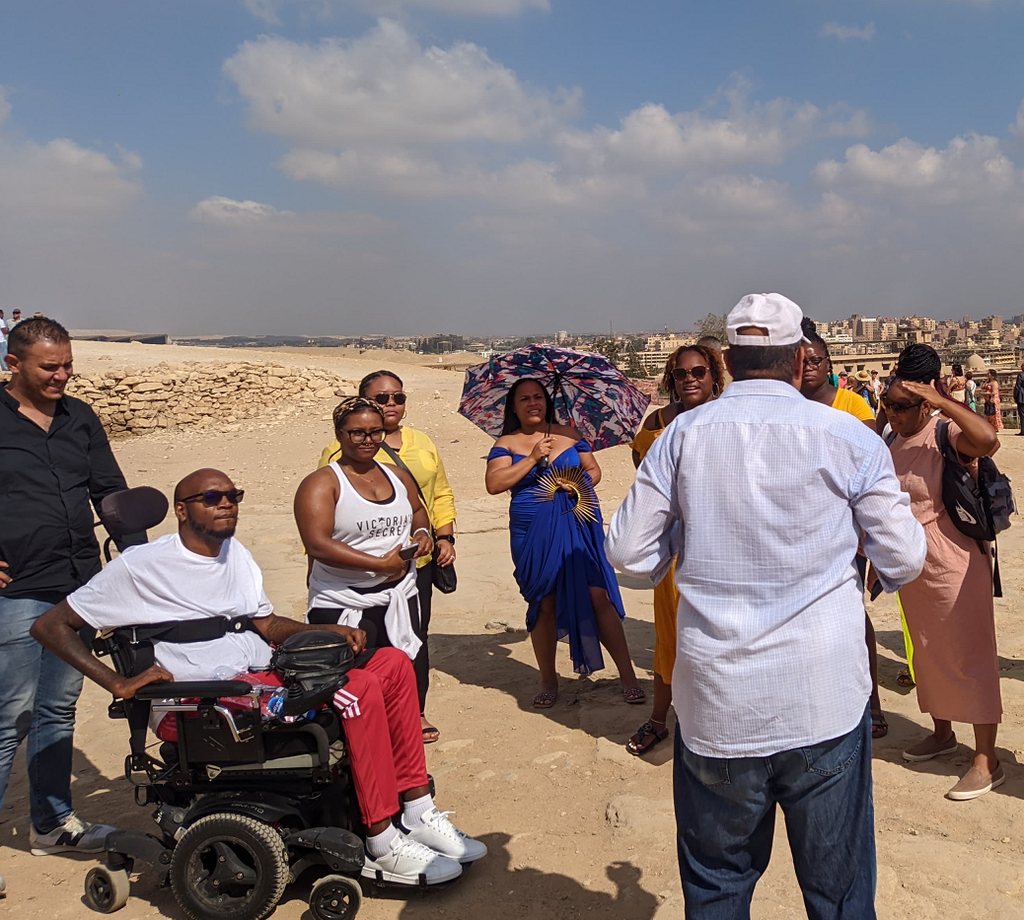
Wheelchair Accessible Vehicles Rental, Transportation & Tours in Egypt
Egypt is not easy in a wheelchair. The sidewalks are broken. The traffic does not stop for anyone. The buses and the metro were not built with you in mind. None of that is a secret, and pretending otherwise wastes your time.
What is also true is that this country holds things you will not see anywhere else. The Pyramids. The Nile. Karnak at sunrise. And with the right vehicle and a driver who knows what they are doing, you can see all of it. If you are looking for wheelchair accessible transfers in Egypt, that is the work we do. This guide is about how to actually plan the trip.
What an accessible vehicle actually means here
It means different things depending on your chair and your body. That is the part most people get wrong when they book.
If you use a manual chair and you can transfer into a car seat, you have options. The chair folds, goes in the trunk, and a standard sedan or SUV works fine. Cheaper, easier to find, no hassle.
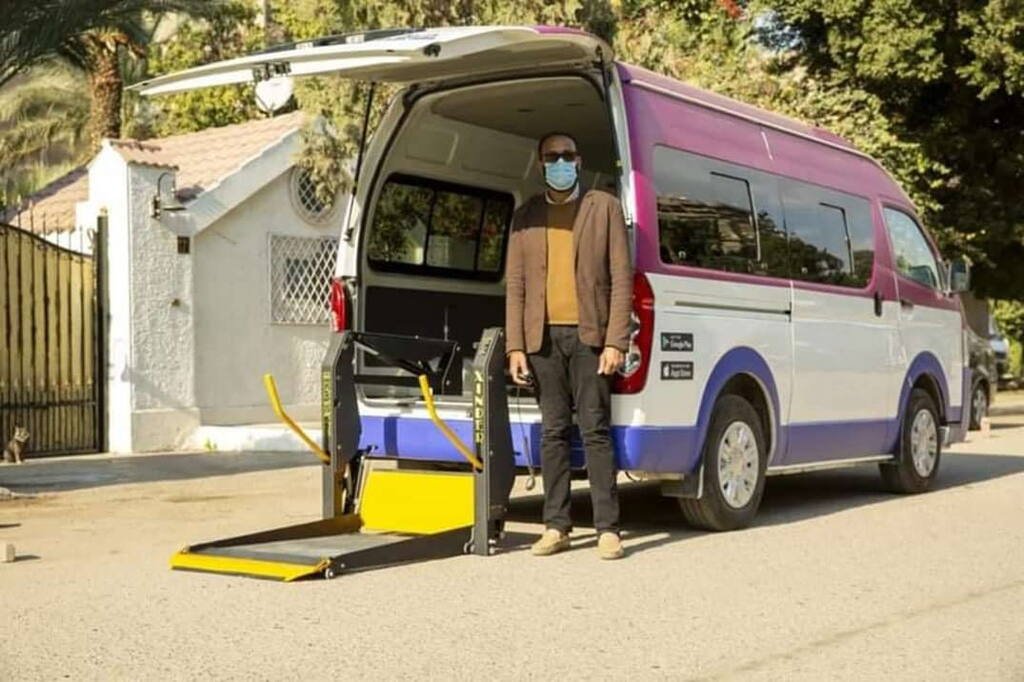
If you use a powered chair, or you cannot transfer, the equation changes. You need a vehicle with a ramp or a lift. You need securement straps. You need a driver who has done this before and is not learning on your booking. Those vehicles exist in Egypt. They are not everywhere, and they are not cheap, but they exist.
Three setups we work with:
- Ramp vans — you roll in, stay in your chair, straps hold you down. Companion seats in the back.
- Lift minibuses — bigger, better for groups or families. Same idea, more space.
- Standard sedans and SUVs — for anyone who can transfer. Most available, most affordable.
Browse the full range of wheelchair accessible vehicle options on the transfers page. If you are not sure which one fits, message us with your chair type and we will tell you.
One thing worth knowing: Egyptian law (Law No. 10 of 2018) requires public transport to have spaces for disabled passengers and to offer at least a 50% fare discount for the person and their companion. On paper, that is real. In practice, enforcement on buses and trains is spotty and the discounts are hard to claim as a tourist. So private transport remains the practical answer.
Site by site: what actually works
Most guides say “Egypt is accessible” and stop there. That is useless. Here is the real breakdown.
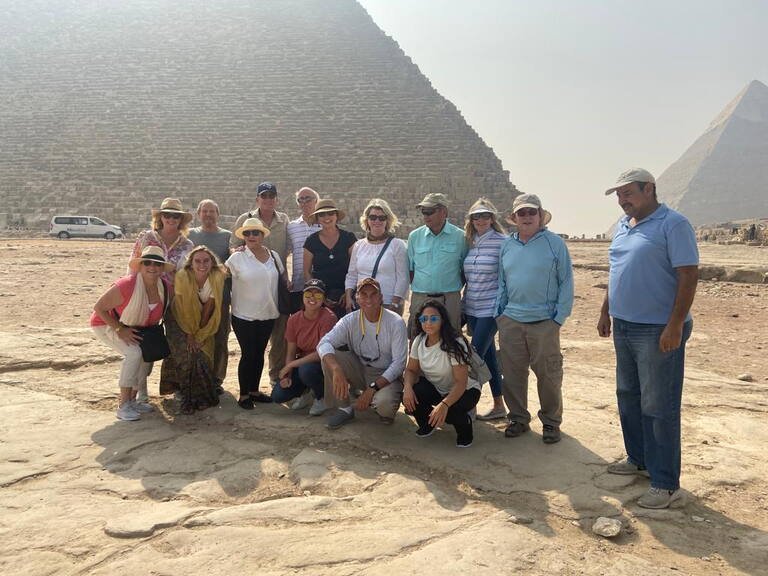
Giza Pyramids and the Sphinx
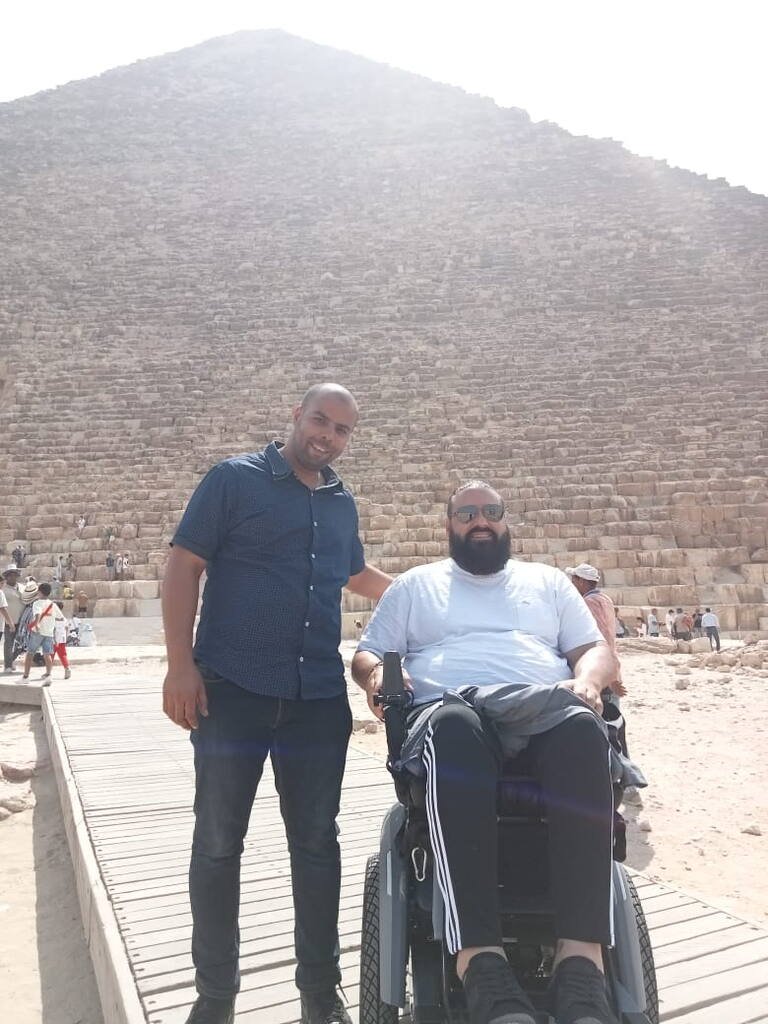
You drive across the plateau. That is the trick. There is a panoramic viewpoint where the ground is firm and flat, and it is the best photo spot on the site anyway. The Sphinx has a viewing area that works from the accessible path — there are steps near the enclosure, but you do not need them to see it.
The interior of the Great Pyramid is out. The entrance is a steep, low, narrow passage. No ramp. No elevator. Even people who can walk find it uncomfortable. Skip it and spend the time outside instead.
We build Giza days around the exterior viewpoints and the panoramic area. You get the full experience minus the climb nobody actually enjoys.
Grand Egyptian Museum
This is the one site in Egypt where you do not have to think about accessibility at all. Ramps. Elevators. Accessible restrooms. Wide corridors. Flat floors. It was built recently and it shows.
If you have the energy for one big site in Cairo, this is it. The Tutankhamun collection is here now, the full thing including the mask. Plan a half day minimum. Longer if you like museums.
Egyptian Museum at Tahrir
Different era, different building, different reality. The ground floor works. The upper floors depend on whether the elevator is running that day, and it is not always running. Restrooms are not accessible.
If the GEM is on your list, you can skip this one without regret. If you go anyway, keep it short.
Karnak and Luxor Temple
Karnak does better than you would expect. The main routes are flat and there are ramps where they matter. Some uneven ground, but passable. Luxor Temple is easier still — mostly level paths, no real stairs.
Both are worth doing. We plan the route to avoid the rough patches where we can.
Valley of the Kings
This is the difficult one. The valley is accessible by vehicle, and a tram takes you from the gate to the tombs. Once you are in the tomb area, it varies wildly. Some tombs have ramps or walkways. Others have steep internal stairs. The ground between them is sand and gravel.
You can get in. You can see the valley, the cliffs, the entrances, and the more accessible tombs. You will not see everything. Nobody sees everything, wheelchair or not. We can tell you which tombs are worth attempting based on your chair and your mobility, and which ones to skip.
Hatshepsut Temple
Ramped terraces. Vehicle access to the base. One of the better ancient sites in Luxor for a wheelchair. Worth the stop.
Aswan High Dam and Philae Temple
The High Dam is a drive-up and flat. Easy. Philae is more involved — you have to take a boat to the island. The grounds on the island are manageable. Boarding the boat is the hard part. With help, it works.
Abu Simbel
The forecourt is flat and accessible. The facade is right there, in front of you, no obstacles. The interior has a threshold and a few steps. If you can manage them, you can go in. If you cannot, you still get the main event — the four colossi and the sunrise if you time it right.
Nile cruises
A Nile cruise is one of the better ways to see Upper Egypt in a wheelchair, mostly because you unpack once and the boat does the moving. Several ships now have accessible cabins with roll-in showers, and some have lifts between decks.
The Amarco I is the one most people end up on. Four cabins built for passengers with special needs. Boarding is the trickiest part — the gangway angle changes with the water level, and you sometimes cross other docked boats to reach your ship. The crew knows how to help. Tell them in advance exactly what you need, and they will put extra hands on the gangway.
Four to five days from Luxor to Aswan, with stops at Edfu, Kom Ombo, and elsewhere. Relaxed pace. We also handle accessible transfers to and from Nile cruise ports on both ends.
Can you actually do tours?
Yes, but a good accessible tour in Egypt looks different from a normal one.
- A driver who has loaded a wheelchair before, not someone improvising.
- A vehicle that matches your chair. Manual and powered chairs need different setups.
- An itinerary that builds in rest, shade, and accessible bathrooms.
- A guide who accepts that you might skip half a site and does not push back.
We run accessible tours in Cairo, Luxor, Aswan, and Alexandria. Our drivers are trained to assist with wheelchairs, and we can add a companion or assistant if you need one. If you wake up tired and want to cut the day in half, we cut it. No arguments.
Practical things that matter
Time of year. November to April. From May to September, Luxor and Aswan are brutal and heat exhaustion is a genuine risk. Do not book a summer trip to Upper Egypt and expect to enjoy it.
Bathrooms. This is the real problem and most guides avoid it. Accessible restrooms exist at the GEM, at major hotels, and at some restaurants. At ancient sites, they are rare to nonexistent. Build your day around bathrooms. Use the hotel before you leave. Use the museum. Use the restaurant.
Ground. Sand, gravel, uneven stone. A powered chair with large wheels handles this. A manual chair with small wheels does not, and you will need someone to push over the rough patches.
Sun. Hat. Sunscreen. Light cover for your legs. The sun bounces off stone and sand and drains you faster than you expect.
Tell us about your chair. Type, weight, whether you can transfer. This is the single most useful thing you can give us when booking, and it determines which vehicle we assign.
Booking
When you get in touch, tell us:
- Your chair type (manual, powered, dimensions if you have them)
- Whether you can transfer into a car seat, or need to stay in your chair
- How many people are traveling with you
- Your rough itinerary and the sites you care most about
- Anything else that matters — frequent rest breaks, difficulty with short walks, whatever it is
We will match you with the right vehicle and driver, and we will be honest about what will and will not work. If a site is a bad idea for your situation, we will say so and suggest something better. To see pricing and availability, go to the wheelchair accessible transfers page.
Egypt is not perfectly accessible. It never will be. But it is more accessible than most people assume, and the workarounds exist if you know them. We have taken a lot of travelers in wheelchairs around this country, and we know which routes work, which sites are worth the effort, and where to stop for lunch.
Do not write Egypt off. See our accessible transfer services, or send us a message with your situation and let us plan something that actually fits.


Leave a Reply